Friday, March 13, 2009
Tuesday, March 10, 2009
Cleaning Services: Spending Less on a Cleaner Home & Office
With the busy schedule of modern individuals, it is becoming hard to still have time for cleaning of houses thoroughly. Some just manage to live in a house with walls full of finger and splash marks and dirty windows and carpets, while some could not take to stay in an unclean environment, providing sufficient reason for companies that offer cleaning services to exist and continuously grow in number.
These agencies such as the los angeles house cleaning service provide personalized, thorough and efficient cleaning service that would cater to their clients’ specific needs and requirements. In order for this quality of cleaning service to be ensured, cleaning service makes sure that their agents are well-trained, giving them proper training and knowledge on the appropriate ways of cleaning and handling appliances and equipments in all kinds of establishments such as educational institutions, general business offices, hospitals and private residences. Aside from the proper training these companies require their agents to have, they are also taught to be punctual and respectful, not only of their clients, but also of the properties inside the facilities they are assigned to clean, ensuring a harmonious connection between these companies and their customers.
Further, cleaning services should be versatile because establishments have different kinds of needs and it is essential for commercial cleaning companies such as the cleaning service to comply with the demands of their clients. Their satisfaction should be the ultimate goal because as the cliché goes, the consumers are the ones who keep a business facility alive. The key to success in the cleaning service business is to consistently provide clients with a service that would allow them to save more money and spend less time in maintaining their homes or any other establishments.
The Best Cleaners In Orange county,Los Angeles county
Are you looking for an economical and efficient office or building los angeles house cleaning service in Orange County & Los Angeles County. All Solutions Cleaning Service offers full cleaning of floors, windows, and carpets in commercial spaces and complexes.
The janitorial business has been steadily growing as corporations and organizations have welcomed the idea of outsourcing cleaning professionals instead of hiring them directly. This way, executives and managers are spared the recruitment processes and other untowardly incidents, say, a housekeeping mishap brought about by untrustworthy personnel, and could instead focus their full attention to their main operations.
All Solutions cleaning services in Orange County & los angeles has established itself among competitors and is being constantly called upon by small, medium, and large enterprises. The company, which is actually an independent cleaning outfit in the Orange County region, is licensed and insured so you could be sure that you would get your money’s worth.. It is open 24 hours a day and seven days a week. Their scope covers both residential and commercial jobs. They also take on household maintenance and repairs as well as gardening services. They guarantee a worry-free household keeping management with the help of skilled handymen available round the clock. Requests for additional facilities like ramps or raised toilets are also included in their specialty. Call them now to get a free estimate.
These agencies such as the los angeles house cleaning service provide personalized, thorough and efficient cleaning service that would cater to their clients’ specific needs and requirements. In order for this quality of cleaning service to be ensured, cleaning service makes sure that their agents are well-trained, giving them proper training and knowledge on the appropriate ways of cleaning and handling appliances and equipments in all kinds of establishments such as educational institutions, general business offices, hospitals and private residences. Aside from the proper training these companies require their agents to have, they are also taught to be punctual and respectful, not only of their clients, but also of the properties inside the facilities they are assigned to clean, ensuring a harmonious connection between these companies and their customers.
Further, cleaning services should be versatile because establishments have different kinds of needs and it is essential for commercial cleaning companies such as the cleaning service to comply with the demands of their clients. Their satisfaction should be the ultimate goal because as the cliché goes, the consumers are the ones who keep a business facility alive. The key to success in the cleaning service business is to consistently provide clients with a service that would allow them to save more money and spend less time in maintaining their homes or any other establishments.
The Best Cleaners In Orange county,Los Angeles county
Are you looking for an economical and efficient office or building los angeles house cleaning service in Orange County & Los Angeles County. All Solutions Cleaning Service offers full cleaning of floors, windows, and carpets in commercial spaces and complexes.
The janitorial business has been steadily growing as corporations and organizations have welcomed the idea of outsourcing cleaning professionals instead of hiring them directly. This way, executives and managers are spared the recruitment processes and other untowardly incidents, say, a housekeeping mishap brought about by untrustworthy personnel, and could instead focus their full attention to their main operations.
All Solutions cleaning services in Orange County & los angeles has established itself among competitors and is being constantly called upon by small, medium, and large enterprises. The company, which is actually an independent cleaning outfit in the Orange County region, is licensed and insured so you could be sure that you would get your money’s worth.. It is open 24 hours a day and seven days a week. Their scope covers both residential and commercial jobs. They also take on household maintenance and repairs as well as gardening services. They guarantee a worry-free household keeping management with the help of skilled handymen available round the clock. Requests for additional facilities like ramps or raised toilets are also included in their specialty. Call them now to get a free estimate.


Friday, March 6, 2009
Costa Rican Real Estate
For those who are planning to invest in real estate, one great place to invest is in the country of Costa Rica. You’ll find that Costa Rica is a lovely country and it definitely has a lot to offer those who purchase Costa Rica real estate. Many people are starting to invest in real estate in this country, and when you look at the beauty of the country, it is very easy to see why. When you are dealing with Costa Rican real estate, there are a variety of different options for you to consider. You can choose from single family homes, lots that can be developed, and condominiums as well. Sure, there are a variety of reasons to buy Costa Rica real estate, but there are some great reasons that involve the beauty of the country.First of all, you’ll find that Costa Rica has beautiful beaches, and there are actually beaches on both sides of the country. This is reason enough to buy Costa Rica real estate. , since beach property is worth so much. The beaches are very beautiful, and there are great properties located on the beach and close to the beach. Of course the beach is not the only beautiful part of the country.The mountains in Costa Rica are also very beautiful, and it may be difficult to decide whether the mountains or the beaches are more beautiful. There are also rain forests in the country, and you’ll find active and inactive volcanoes as well. With so many magnificent scenes to enjoy, you’ll soon realize that Costa Rican real estate is a great purchase.Not only is the country beautiful, but the cost of living in the country is cheap as well. If you are looking for a place where you can live fairly cheaply on beautiful property, then Costa Rica real estate. is right for you.
How To Buy Ocean Front Property In Costa Rica
You may have considered purchasing property in Costa Rica. The ocean front property in Costa Rica is a tropical like paradise. If you are considering it I recommend you read this article to help shed some light on the issues involved in buying beach front property in Costa Rica. Costa Rica real estate beaches are one of the most beautiful in the world.One of the advantages of living in Costa Rica is the stable and peaceful government that encourages US citizens to come here and retire. Overall, Costa Rican's are lovely people and make you feel at home. The crime rate is very low, and during the 15 years I have lived here I haven't had any problems.Have you thought about making the giant leap and purchasing ocean front property as a second home or an investment? During the past 5 years real estate has been increasing at a remarkable 18 - 30 % per year. How do you invest in Costa Rica ocean front properties? Read on, and I'll share my thoughts on the guidelines to buying ocean front property anywhere else in Costa Rica.Here's one current example of one the best deals for beach front property that is 38 (plus acres) that could be developed as urbanization or your own personal estate. There are only two ways to go about buying ocean front property in Costa Rica? The wrong way, and my way. Based on my experience of living here in Costa Rica real estate for the last 15 years. Here's my thoughts:- Make sure the area your looking at is a place you would like to vacation at. It's a good idea to search the online forums and interest groups. If you plan on making a large purchase then spend a few days in the area to see if it is the right place for you. You will get a more in depth idea if you spend more time there. You don't want to in your "tropical dream paradise" regretting that you've done it.- Find a competent lawyer to represent your interests. Do not get a referral from the seller or real estate agent. Always find your own lawyer to manage your purchase. It is common sense, but important nonetheless. Try to find one that speaks your language fluently and has considerable knowledge of maritime zone law.- Costa Rican maritime law is different in every Central American country and you need to know all of the details before purchasing ocean front property in Costa Rica.- Look around and make contact with the owners of the property. Professional real-estate agents like Century 21 are going to cost a little more than if you purchased directly from the owner. If you're comfortable with the risk then I recommend looking for the owners directly. The risks are slightly higher when dealing with the owner, but the cost savings will be significant. Your lawyer will make sure you are buying is legitimate.- ACT FAST! Don't hurry, but act fast. Land prices are on the rise, and not showing signs of slowing down any time soon. Once your sure, act. The current owner may have second thoughts and want to renegotiate or may not want to sell. Be patient, but act quickly.- NEGOTIATE DIRECTLY WITH THE OWNER!! I'll write it one more time. Negotiate directly with the owner. I can't stress this enough. Always, always negotiate directly with the owner.- Get a topographer to do a recent survey the land. The owner will have a "plano catestrado", but you will need to make your own survey to verify the location and size of your property. You want to make sure your getting what you paid for.- Compare prices and value with other sellers and other properties in the same region of Costa Rica real estate. There are different beaches in Costa Rica and each one has its own environment. Look around and find one that's right for you.The best of luck in your search for your beach front property in Costa Rica!
Tuesday, August 5, 2008
Google's guide on SEO
 What's an SEO? Does Google recommend working with companies that offer to make my site Google-friendly?
SEO is an acronym for "search engine optimization" or "search engine optimizer." Deciding to hire an Toronto search engine optimizaiton is a big decision. Make sure to research the potential advantages as well as the damage that an irresponsible SEO can do to your site. Many SEOs and other agencies and consultants provide useful services for website owners, including:
* Reviewing and providing recommendations on your site content or structure
* Technical advice on website development: for example, hosting, redirects, error pages, use of JavaScript
* Content development
* Managing online business development campaigns
* Keyword research
* SEO training
Keep in mind that the Google search results page often includes paid advertising and free organic search results. It costs nothing to appear in our organic search results, and advertising with Google won't improve your ranking. Free resources such as Webmaster Tools, the official Webmaster Central blog, and our discussion group can provide you with a great deal of information about how to optimize your site for organic search. Many of these free sources, as well as information on paid search, can be found on Google Webmaster Central.
Before beginning your search for an SEO , it's a great idea to become an educated consumer and get familiar with how search engines work. We recommend starting here:
* Google Webmaster Guidelines
* Google 101: How Google crawls, indexes and serves the web.
If you're thinking about hiring an SEO, the earlier the better. A great time to hire is when you're considering a site redesign, or planning to launch a new site. That way, you and your SEO can ensure that your site is designed to be search engine-friendly from the bottom up. However, a good SEO can also help improve an existing site.
Some useful questions to ask an SEO include:
* Can you show me examples of your previous work and share some success stories?
* Do you follow the Google Webmaster Guidelines?
* Do you offer any online marketing services to complement your organic search business?
* What kind of results do you expect to see, and in what timeframe?
* What's your experience in my industry?
* How long have you been in business?
While SEOs can provide clients with valuable services, some unethical SEOs have given the industry a black eye through their overly aggressive marketing efforts and their attempts to manipulate search engine results in unfair ways. Practices that violate our guidelines may result in your site being removed from the Google index. Here are some things to consider:
* Be wary of SEO firms and web consultants or agencies that send you email out of the blue.
Amazingly, we get these spam emails too:
"Dear google.com,
I visited your website and noticed that you are not listed in most of the major search engines and directories..."
Reserve the same skepticism for unsolicited email about search engines as you do for "burn fat at night" diet pills or requests to help transfer funds from deposed dictators.
* No one can guarantee a #1 ranking on Google.
Beware of SEOs that claim to guarantee rankings, allege a "special relationship" with Google, or advertise a "priority submit" to Google. There is no priority submit for Google. In fact, the only way to submit a site to Google directly is through our Add URL page or by submitting a Sitemap and you can do this yourself at no cost whatsoever.
* Be careful if a company is secretive or won't clearly explain what they intend to do.
Ask for explanations if something is unclear. If an SEO creates deceptive or misleading content on your behalf, such as doorway pages or "throwaway" domains, your site could be removed entirely from Google's index. Ultimately, you are responsible for the actions of any companies you hire, so it's best to be sure you know exactly how they intend to "help" you.
* You should never have to link to an SEO.
Avoid SEOs that talk about the power of "free-for-all" links, link popularity schemes, or submitting your site to thousands of search engines. These are typically useless exercises that don't affect your ranking in the results of the major search engines -- at least, not in a way you would likely consider to be positive.
* Choose wisely.
While you consider whether to go with an SEO, you may want to do some research on the industry. Google is one way to do that, of course. You might also seek out a few of the cautionary tales that have appeared in the press, including this article on one particularly aggressive SEO: http://seattletimes.nwsource.com/html/businesstechnology/2002002970_nwbizbriefs12.html. While Google doesn't comment on specific companies, we've encountered firms calling themselves SEOs who follow practices that are clearly beyond the pale of accepted business behavior. Be careful.
* Be sure to understand where the money goes.
While Google never sells better ranking in our search results, several other search engines combine pay-per-click or pay-for-inclusion results with their regular web search results. Some SEOs will promise to rank you highly in search engines, but place you in the advertising section rather than in the search results. A few SEOs will even change their bid prices in real time to create the illusion that they "control" other search engines and can place themselves in the slot of their choice. This scam doesn't work with Google because our advertising is clearly labeled and separated from our search results, but be sure to ask any SEO you're considering which fees go toward permanent inclusion and which apply toward temporary advertising.
* What are the most common abuses a website owner is likely to encounter?
One common scam is the creation of "shadow" domains that funnel users to a site by using deceptive redirects. These shadow domains often will be owned by the SEO who claims to be working on a client's behalf. However, if the relationship sours, the SEO may point the domain to a different site, or even to a competitor's domain. If that happens, the client has paid to develop a competing site owned entirely by the SEO.
Another illicit practice is to place "doorway" pages loaded with keywords on the client's site somewhere. The Toronto SEO services promises this will make the page more relevant for more queries. This is inherently false since individual pages are rarely relevant for a wide range of keywords. More insidious, however, is that these doorway pages often contain hidden links to the SEO's other clients as well. Such doorway pages drain away the link popularity of a site and route it to the SEO and its other clients, which may include sites with unsavory or illegal content.
* What are some other things to look out for?
There are a few warning signs that you may be dealing with a rogue SEO. It's far from a comprehensive list, so if you have any doubts, you should trust your instincts. By all means, feel free to walk away if the SEO:
o owns shadow domains
o puts links to their other clients on doorway pages
o offers to sell keywords in the address bar
o doesn't distinguish between actual search results and ads that appear in search results
o guarantees ranking, but only on obscure, long keyword phrases you would get anyway
o operates with multiple aliases or falsified WHOIS info
o gets traffic from "fake" search engines, spyware, or scumware
o has had domains removed from Google's index or is not itself listed in Google
If you feel that you were deceived by an SEO in some way, you may want to report it.
Advertising; get out there, and get noticed
Monday, August 4, 2008
Writing a Job Description - Is it Marketing?
 Writing job descriptions to post online can be a daunting and even boring task. But why does it have to be? It could be one of the most important things you do. Why? Well, what you're selling is your company rather than the product your company sells.
You want a prospective employee to choose you, over another company, to spend their entire and very valuable day with. Your company can be the reason your new employee gets up in the morning and transports themselves to work. That's a really important decision for any prospective employee to make.
So is writing a job description considered marketing? Perhaps one of the most important forms of it!
Here's a template we use that might help get you started. Before we write about the position we're trying to fill we provide an overview that looks something like this.
Who We Are
Here write about what your company does, how long you've been in business, any awards your company has won, and how fast you're growing. You want your employee to get excited about the company first.
Our Culture
In our case we write about how we "work hard but play hard". You might talk about how fun it is to work in your company and some fun stories about your customers. If your business is a bit more serious you might focus on any employee achievements or how you empower your employees. Either way, you want to give the vibe of what it could be like to work in your company.
What We Offer
Here you can write in generalities about your generous package and the way you promote from within. This is to make prospective employees feel great about applying.
Then we get into the actual descriptions.
Job Title
Provide a paragraph of the overall position. You'll want to get your prospective employee excited about what they'll be doing day-to-day. Here's an example of a posting we have for a Marketing Manager:
The Marketing Programs Manager role is integral to Toronto SEO marketing’s rapidly growing marketing organization and is responsible for driving new customer conversion through email, surveys and postcards. This is a great opportunity for a proven marketing programs professional to gain broad experience across a variety of channels and help drive the most important objective of the company.
Qualifications
Here you'll give your bulleted must haves. It's tough to be sexy here. You'll want some number of years of experience, some education level, someone who is detail-oriented. Just think about all of the things this person must know how to do before coming into the job.
Responsibilities
These are bulleted areas of what this person is going to be responsible for day-to-day. Here you should even try to make the mundane sound hot!
To Apply
Here's where you can have a bit of fun and let your culture show through. Here's an example of that Marketing Position we have open.
To Apply:
* Send a copy of your resume to hiring@verticalresponse.com
* Tell us why you love marketing
* Tell us a funny story or funny joke (yes, we’re testing to see if you actually have a sense of humor)
* Tell us why you’re passionate about helping small businesses grow
Overall you're trying to get a new employee who fits into your culture. You want to match how you position the job opening to the copy you write. So make sure you put a bit of effort into how you market your company to your prospective employees and you'll win in the end.
If anyone has their own template or can improve on our design please share!
Advertising; get out there, and get noticed
Tuesday, July 29, 2008
Yesup SEO
Toronto, Ontario, January 7, 2008 - Yesup Ecommerce Solutions Inc., announced that it will invest $2.5 million dollars into it's IT subdivision to engage in it's own new innovative Ad Marketplace.
As the growth of online advertising continues to stays strong, we see the liquidity and the demand for a transparent marketplace, and believe that consumers are putting more emphasis on Ad Marketplaces when deciding how to allocate their budget.
The Ad Marketplace will be developed with the mind-set of aligning Yesup Ecommerce Solutions Inc.'s mission of creating simplicity from complexity. As always, there will be innovative ideas to distinguish ourselves from the crowd.
Advertising; get out there, and get noticed
What is email marketing?
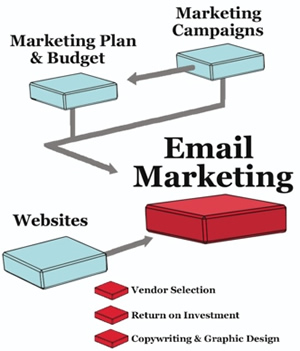 E-mail marketing is a form of direct marketing which uses electronic mail as a means of communicating commercial or fundraising messages to an audience. In its broadest sense, every e-mail sent to a potential or current customer could be considered e-mail marketing. However, the term is usually used to refer to:
Sending e-mails with the purpose of enhancing the relationship of a merchant with its current or old customers and to encourage customer loyalty and repeat business.
Sending e-mails with the purpose of acquiring new customers or convincing old customers to buy something immediately.
Adding advertisements in e-mails sent by other companies to their customers.
E-mails that are being sent on the Internet
Advantages
E-mail marketing (on the Internet) is popular with companies because:
The advantage of a mailing list is clearly the ability to distribute information to a wide range of specific, potential customers at a relatively low cost using services.
Compared to other media investments such as direct mail or printed newsletters, it is less expensive.
An exact Return on investment can be tracked ("track to basket") and has proven to be high when done properly. E-mail marketing is often reported as second only to search marketing as the most effective online marketing tactic.
It is instant, as opposed to a mailed advertisement, an e-mail arrives in a few seconds or minutes.
It lets the advertiser "push" the message to its audience, as opposed to a website that waits for customers to come in.
It is easy to track. An advertiser can track users via web bugs, bounce messages, un-subscribes, read-receipts, click-throughs, etc. These can be used to measure open rates, positive or negative responses, correlate sales with marketing.
Advertisers generate repeat business affordably and automatically
Advertisers can reach substantial numbers of e-mail subscribers who have opted in (consented) to receive e-mail communications on subjects of interest to them
Over half of Internet users check or send e-mail on a typical day.
Specific types of interaction with messages can trigger other messages to be automatically delivered
Specific types of interaction with messages can trigger other events such as updating the profile of the recipient to indicate a specific interest category
Green - e-mail marketing is paper-free
 Disadvantages
Many companies use e-mail marketing to communicate with existing customers, but many other companies send unsolicited bulk e-mail, also known as spam.
Internet system administrators have always considered themselves responsible for dealing with "abuse of the net", but not "abuse on the net". That is, they will act quite vigorously against spam, but will leave issues like libel or trademark infringement to the courts. Most administrators passionately hate spam, which they define as any unsolicited e-mail. Draconian measures—such as taking down a corporate website with or without warning — are an entirely normal response to spamming. Typically, the "Terms of Service" in Internet companies' contracts allow this, so the spammer has no recourse.
Illicit e-mail marketing antedates legitimate e-mail marketing, since on the early Internet (see Arpanet) it was not permitted to use the medium for commercial purposes. As a result, marketers attempting to establish themselves as legitimate businesses in e-mail marketing have had an uphill battle, hampered also by criminal spam operations billing themselves as legitimate.
It is frequently difficult for observers to distinguish between legitimate and spam e-mail marketing. First off, spammers attempt to represent themselves as legitimate operators, obfuscating the issue. Second, direct-marketing political groups such as the U.S. Direct Marketing Association (DMA) have pressured legislatures to legalize activities which some Internet operators consider to be spamming, such as the sending of "opt-out" unsolicited commercial e-mail. Third, the sheer volume of spam e-mail has led some users to mistake legitimate commercial e-mail (for instance, a mailing list to which the user subscribed) for spam — especially when the two have a similar appearance, as when messages include HTML and flashy graphics.
Due to the volume of spam e-mail on the Internet, spam filters are essential to most users. Some marketers report that legitimate commercial e-mails frequently get caught by filters, and hidden; however, it is somewhat less common for e-mail users to complain that spam filters block legitimate mail.
Companies considering an e-mail marketing program must make sure that their program does not violate spam laws such as the United States' CAN-SPAM Act (Controlling the Assault of Non-Solicited Pornography and Marketing Act),the European Privacy & Electronic Communications Regulations 2003 or their Internet provider's acceptable use policy. Even if a company follows the law, if Internet mail administrators find that it is sending spam it is likely to be listed in blacklists such as SPEWS.
CAN-SPAM compliance
Because the CAN-SPAM Act of 2003 authorizes a USD 11,000 penalty per violation for spamming each individual recipient, many commercial e-mail marketers within the United States utilize a service or special software that helps ensure compliance with the Act. A variety of older systems exist which do not ensure compliance with the Act. To comply with the Act's regulation of commercial e-mail, services typically: require users to authenticate their return address and include a valid physical address, provide a one-click unsubscribe feature, and prohibit importing lists of purchased addresses which may not have given valid permission.
In addition to satisfying legal requirements, service providers stepped in to help customers to set up and manage their own e-mail marketing campaigns. The services provide e-mail templates, automatically handle subscriptions and removals, and generate statistics on how many messages were received and opened, and whether the recipients clicked on any links within the messages.
This act was recently updated with some new changes which will go into effect July 7, 2008
Opt-in e-mail advertising
Opt-in e-mail advertising or permission marketing is a method of advertising via electronic mail whereby the recipient of the advertisement has consented to receive it. It is one of several ways developed by marketers to eliminate the disadvantages of e-mail marketing.
E-mail has become a very popular mode of communication across the world. It has also become extremely popular to advertise through. Some of the many advantages of advertising through e-mail are the direct contact with the consumer and is “inexpensive, flexible, and simple to implement” (Fairhead, 2003). There are also disadvantages attached to e-mail advertising such as, alienating the consumer because of overload to messages or the advertisement getting deleted without getting read.
Permission e-mail marketing may evolve into a technology that uses a handshake protocol between sender and receiver (Fairhaed, 2003. This system is intended to eventually result in a high degree of satisfaction between consumers and marketers. If opt-in e-mail advertising is used, the material that is e-mailed to consumers will be “anticipated.” It is assumed that the consumer wants to receive it, which makes it unlike unsolicited advertisements sent to the consumer (often referred to as spam).Ideally, opt-in e-mail advertisements will be more personal and relevant to the consumer than untargetted advertisements.
A common example of permission marketing is a newsletter sent to a firm’s customers. Newsletters like this are a way to let customers know about upcoming events or promotions, or new products.In this type of advertising, a company that wants to send a newsletter to their customers may ask them at the point of purchase if they would like to receive this newsletter.
With a foundation of opted-in contact information stored in a database, marketers can automatically send out promotional materials. The marketers can also segment their promotions to specific market segments.
Advertising; get out there, and get noticed
Tuesday, July 22, 2008
Western Olympic Ads Cheerlead for China

BEIJING — It is becoming increasingly clear which nation global corporations will be rooting for at this summer’s Olympics: China.
Or at least that’s what it looks like from advertisements here. McDonald’s is running a “Cheer for China” television ad. Nike ads feature China’s star hurdler, Liu Xiang, and other Chinese athletes besting foreign competitors. Earlier this year, Pepsi even painted its familiar blue cans red for a limited edition “Go Red for China” promotion.
The campaigns for Western companies are part of an advertising blitz the likes of which this ostensibly communist nation has never seen. Ads are papered over bus shelters, projected on giant outdoor television screens and plastered on billboards. Commercials even flicker at commuters as they zoom through subway tunnels.
China, already the world’s second-largest advertising market, after the United States, is a dream for consumer product companies. “For most international brands here, China is the growth market for the next 10 years,” said Jonathan Chajet, strategic director at Interbrand, which consults on brands.
A record 63 companies have become sponsors or partners of the Beijing Olympics. Olympic-related advertising in China could reach $4 billion to $6 billion this year, according to CSM, a Beijing marketing research firm.
“You’ve never seen the Olympics in a market that has such domestic, commercial scale,” says Michael Wood, the chief executive for greater China at Leo Burnett, the global advertising agency. “When the Olympics were in Los Angeles and Atlanta, the U.S. market was already fully developed.”
The promise of selling a billion bottles of Coke to China’s 1.3 billion people is no longer a pipe dream; last year, 24 billion bottles of Coca-Cola were sold in China. KFC, a unit of Yum Brands, has more than 2,000 stores here. McDonald’s and Starbucks are ubiquitous. And Nokia, the cellphone maker, sold about 70 million phones to Chinese consumers in 2007, racking up sales of $10 billion.
Now those global brands are trying to extend their reach beyond China’s wealthiest cities. But China’s growing economic clout and increasing nationalism among its youth — as well as the newfound strength of its homegrown brands — pose challenges for foreign companies trying to woo its growing middle class.
“For most international brands, this is a double-edged sword,” said Mr. Chajet of Interbrand. “They’re premium, high-tech and status brands. But there’s rising nationalism, and the Olympics is a rallying cry for the Chinese, who are looking for a reason not to buy foreign.”
To win over Chinese consumers, Adidas, which already has more than 4,000 stores in China, has new television and print ads showing legions of everyday Chinese guiding the country’s top athletes to gold medal performances. The campaign won a top award at the Cannes Lions advertising festival in June.
Erica Kerner, director of Adidas’s Beijing Olympic Games program, said, “This is about rallying the nation.”
Gatorade, which is owned by Pepsico, has a television ad featuring Chinese athletes counting down to the year 2008. It concludes with a group of children, around age 7, at what looks like an Olympic training center, hitting table tennis balls in unison and counting down to 2012 and 2016.
A Volkswagen campaign encourages people to “honk for China”; McDonald’s ads say “I’m Lovin’ It When China Wins”; and Nike, though not an Olympic sponsor, is the official outfitter of more than 20 of China’s teams.
But these advertising ventures are not going unchallenged. The Chinese government is pushing its companies to amplify their ad messages to compete with foreign brands. Many are promoting their home-court advantage.
For example, a print advertising campaign by Anta, one of China’s biggest sportswear companies, shows a crowd of flag-waving youths gesturing like wild revolutionaries in a state of Olympic euphoria. Many of Anta’s television ads include the song lyrics “I love you, China.”
Ads by the dairy producer Yili feature young people and the tag line, “I Make China Strong!”
More than a dozen Chinese companies have paid millions each to become Olympic sponsors, including the computer maker Lenovo (the sole Chinese company among the Games’ “global sponsors”). And some companies are hinting that, like the country’s top athletes, they can go head-to-head with the best in the West.
Marketing experts say one downside to the advertising frenzy is the clutter.
In the sea of ads featuring Chinese athletes pitching products as varied as Cadillacs and traditional Chinese medicine — with endless images of the Olympic stadium — is a simple question: Whose ad was that anyway? In fact, Mr. Liu, the hurdler, is in ads for at least 16 companies, including Nike and Coke.
“The sameness of the ads is the frightening thing,” said Terry Rhoads, managing director at Zou Marketing, a sports consultancy in Shanghai. “You have to wonder about the ad agencies.”
The avalanche of Olympic television advertising is compounded by so-called ambush marketing, in which nonsponsors — often rivals of official sponsors — try to grab some Olympic glory without paying the high sponsorship fees. The proliferation of such ads is not going unchecked; China is scrutinizing the ads of nonsponsors, trying to give prime billboard space to the official sponsors.
Pepsico, for instance, is not an Olympic sponsor, but its Gatorade brand sponsors some Chinese athletes. Nike is also not a sponsor of the Games, but it has created some of the most striking television ads, encouraging Chinese athletes to “Just Do It.”
Further blurring the line between official and unofficial, some competing companies have been allowed as sponsors: three beer makers — Budweiser, Tsingtao and Yanjing — will be Olympic sponsors, authorized not by the International Olympic Committee but by the Beijing Olympic committee.
With so many companies eager to market to China’s increasingly wealthy consumers, advertising agencies and China’s sports industry — which controls Olympic athletes and shares in their sponsorship dollars — have already captured lots of gold.
“There’s never been an Olympics with such a big home market,” says Dick van Motman, the chief executive of the Chinese division of DDB Worldwide, the advertising agency. For global brands to succeed, he said, that means “reinforcing your image; aligning yourself with the China dream; and aligning yourself with China entering the world stage. That’s the real game.”
Advertising; get out there, and get noticed
Subscribe to:
Posts (Atom)
